
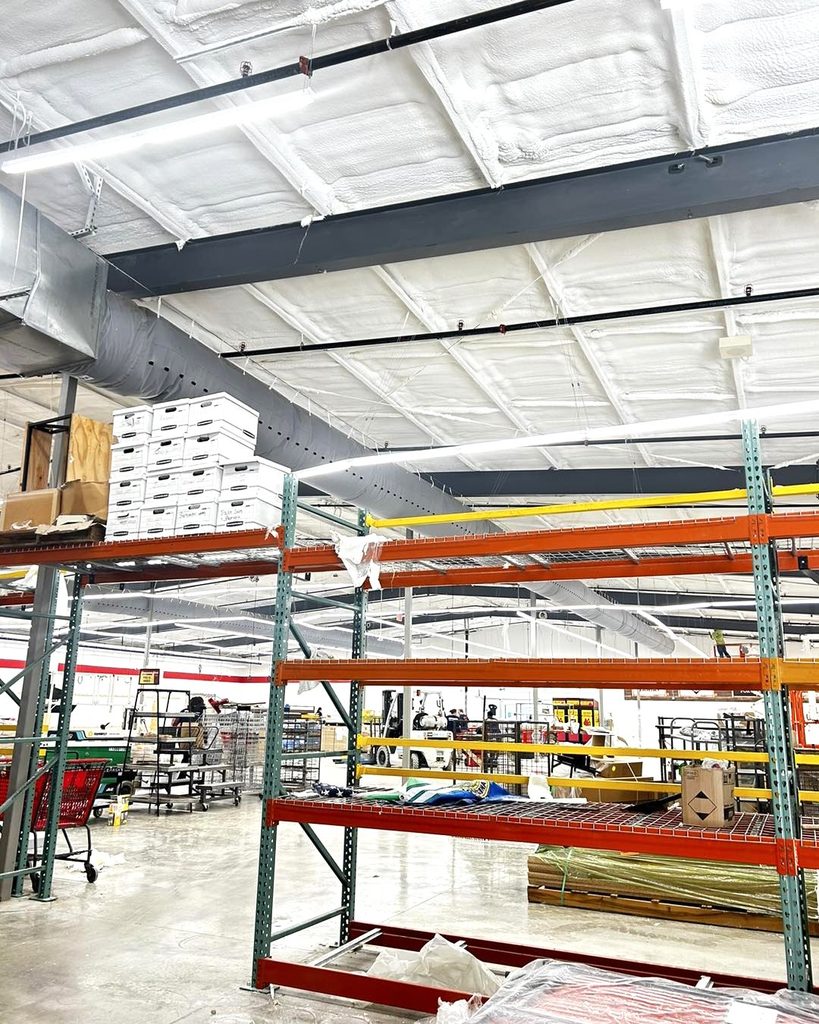
Water drops on the walls or ceiling of a metal building can look like a roof leak. In many cases, the water is caused by condensation, often called “metal building sweat.” This moisture can drip onto tools, products, floors, and equipment. Over time, it may also lead to rust, stains, mold, or damage to materials stored inside. Installing spray foam insulation in Baton Rouge can help control this problem by separating humid indoor air from the metal surface.
Why Do Commercial Metal Buildings Sweat?
Metal heats up and cools down very quickly. On a cool morning or night, the roof and wall panels may become much colder than the air inside the building. When warm, humid air touches that cold metal, the moisture in the air turns into water drops. This is the same thing that happens on the outside of a cold glass. Louisiana’s high humidity can make metal building condensation a common problem in warehouses, workshops, barns, and other commercial spaces.
Daily business activity may add even more moisture to the air. Workers breathing, wet vehicles, washing equipment, cooking, or some types of machines can raise the humidity level inside a building. Gaps around doors, roof panels, vents, and wall joints can also let humid outdoor air enter. Without a strong air seal, this moisture keeps reaching the cold metal and forming water droplets.
Spray Foam Creates a Seal Against the Metal
Spray foam is applied as a liquid to the inside of the metal walls and roof. It expands and bonds directly to the panels, filling small gaps, seams, and hard-to-reach spaces. Once it cures, the foam forms a continuous layer between the indoor air and the metal. This air-sealing barrier keeps warm, moist air from touching the cold surface where condensation forms.
Traditional insulation may leave small gaps around framing, corners, and fasteners. Air can move through those gaps and reach the metal behind the insulation. Spray foam follows the shape of the building and seals these openings. When installed at the right depth, it helps keep the inner surface warmer and reduces the temperature difference that causes commercial buildings to sweat.
Why Closed-Cell Spray Foam Works Well on Metal Buildings
Closed-cell spray foam is often used for commercial metal buildings because it is dense, rigid, and resistant to moisture movement. Its tiny cells are sealed, which helps slow water vapor and air from passing through the material. It also bonds well to properly prepared metal surfaces and holds its shape over time. These features make closed-cell spray foam a strong choice for buildings that face heat and high humidity.
Closed-cell foam also has a high insulation value for its thickness. This is helpful in metal buildings where wall or roof space may be limited. The foam can provide insulation, air sealing, and moisture resistance in one system. Because it hardens after installation, it may also add support to metal wall and roof panels.
Spray Foam Helps Protect the Building and Its Contents
Ongoing condensation can damage more than the metal panels. Water may drip onto stored products, boxes, vehicles, tools, electrical equipment, or finished goods. Wet floors may become slippery, while damp materials can develop odors or mold. By reducing moisture buildup, spray foam helps create a cleaner and drier place for employees, equipment, and inventory.
Less condensation may also slow the spread of rust on metal panels, fasteners, and framing. Spray foam does not repair metal that is already rusted, and it cannot stop water coming through an active roof leak. Any leaks, loose panels, or damaged areas should be repaired before installation. The metal must also be clean and dry so the foam can bond to it correctly.
Better Temperature Control Can Lower Energy Waste
Metal buildings can become very hot during the Baton Rouge summer. Without insulation, heat moves through the roof and walls and raises the indoor temperature. If the building is cooled, air leaks can let conditioned air escape while hot, humid air enters. Spray foam insulation slows heat flow and seals many of these leaks.
A tighter building may be easier to cool, with fewer hot spots and temperature changes. This can reduce the strain on heating and cooling equipment and may lower energy use. Workers may also feel more comfortable, and products that react to heat or moisture may receive better protection.
Professional Installation Matters
Stopping condensation depends on more than spraying foam in random areas. The installer must check the building, find air leaks, review the moisture problem, prepare the metal, and apply the proper type and depth of foam. The building may also need ventilation or humidity control, since spray foam cannot remove moisture already being produced inside. A professional inspection helps find the right plan for the property.
If your warehouse, workshop, storage building, or other metal structure has dripping ceilings or damp walls, Polyco Spray Foam can help. Our team installs spray foam insulation in Baton Rouge for commercial buildings that need better air sealing, temperature control, and moisture protection. Contact Polyco Spray Foam today to request an estimate and learn how spray foam can help keep your metal building dry.