
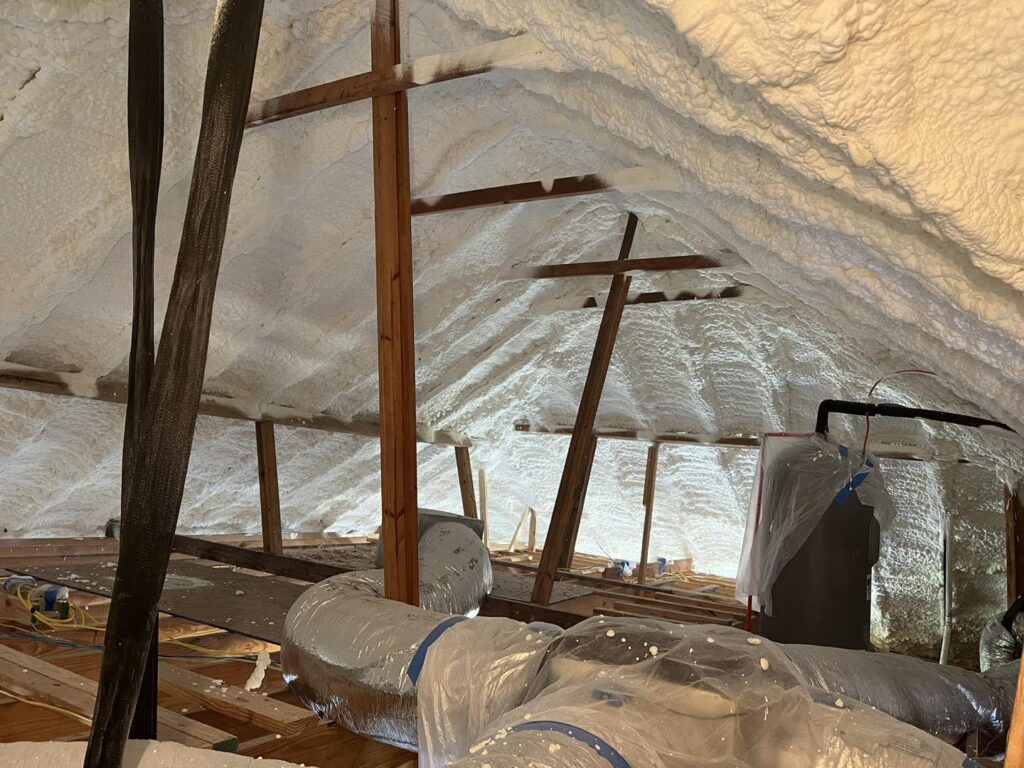
Louisiana attics face long months of heat, high humidity, and heavy rain. When warm, wet air enters through small gaps in the roof or ceiling, it can leave moisture on wood, insulation, and other attic surfaces. These damp areas give mold a place to grow. Professionally installed spray foam insulation in Baton Rouge helps control this problem by sealing air leaks and limiting the moisture that reaches the attic. It cannot fix an active roof leak or remove mold that is already there, but it can make the attic less welcoming to new growth.
Mold Needs Moisture to Grow in an Attic
Mold spores are common in the air, but they need enough moisture to grow. A hot Louisiana attic can become damp when humid outdoor air enters through cracks, gaps, and poorly sealed openings. Water may also enter through roof damage or collect when warm air meets a cooler surface. Once wood, drywall, or old insulation stays wet, mold can begin to spread. Some types may release substances that can affect the air, while many others can still cause odors, stains, and damage. The best way to lower the risk is to keep the attic dry and repair the source of any unwanted water.
Spray Foam Seals Small Air Leaks
Traditional insulation may slow heat, but it does not always stop air from passing through gaps. Spray foam insulation starts as a liquid and expands after it is applied. This lets it fill small cracks and spaces around roof decking, framing, and hard-to-reach areas. Once it cures, the foam forms an air seal that limits the movement of warm, humid air. With less humid air entering the attic, there is less moisture available to support mold growth. This sealed layer can also help indoor temperatures stay more steady during Baton Rouge summers.
Better Humidity Control Protects Attic Materials
Moisture can enter an attic without a clear water leak. In Louisiana, outdoor air often carries a large amount of water vapor. When that air keeps moving into the attic, the space may remain damp for long periods. A properly planned spray foam system reduces unwanted air movement and helps the home control indoor humidity. This protects roof decking, rafters, and other wood parts from staying damp. It may also reduce the musty smell that often comes with a moisture problem. Good humidity control supports a cleaner and more stable attic, but the home’s HVAC and ventilation setup must also match the new sealed space.
Closed-Cell Foam Adds Moisture Resistance
Closed-cell spray foam is dense, firm, and highly resistant to water movement. When installed at the correct depth, it can provide added protection in areas that face high moisture levels. It bonds to the surface and creates a strong, continuous layer with very few openings. This can help keep outdoor moisture away from the wood and other attic materials that mold uses as a food source. Open-cell spray foam also provides a strong air seal, but it handles water vapor differently. The right foam depends on the attic design, roof system, and moisture needs, which is why the space should be checked before installation.
Spray Foam Cannot Repair Every Source of Moisture
No type of attic insulation can stop mold if water is entering through a damaged roof, broken pipe, or poor drainage point. Those problems need to be repaired before foam is applied. Any existing mold contamination should also be handled by a qualified mold professional. Spraying foam over damp or moldy materials can hide the problem instead of solving it. The surface must be clean and dry, and the source of the moisture must be found. Proper preparation allows the foam to bond well and helps keep moisture from becoming trapped inside the roof system.
Professional Installation Helps Avoid Hidden Problems
Spray foam must be mixed, applied, and cured under the right conditions. Applying it to a wet surface or leaving gaps can reduce its performance and create new moisture concerns. A trained installer checks the attic, chooses the proper foam, and applies the needed thickness across the area. The installer must also account for attic ventilation, HVAC equipment, and combustion appliances. This creates a complete building envelope that manages air and moisture instead of moving the problem to another part of the home.
Protect Your Baton Rouge Attic from Moisture
A dry attic is less likely to support mold growth, wood damage, and musty odors. By sealing air leaks and limiting humid air, spray foam insulation in Baton Rouge can help protect your attic from Louisiana’s wet climate. If you are concerned about moisture or weak insulation, contact Polyco Spray Foam to have your attic inspected and request an estimate for professional spray foam installation.