
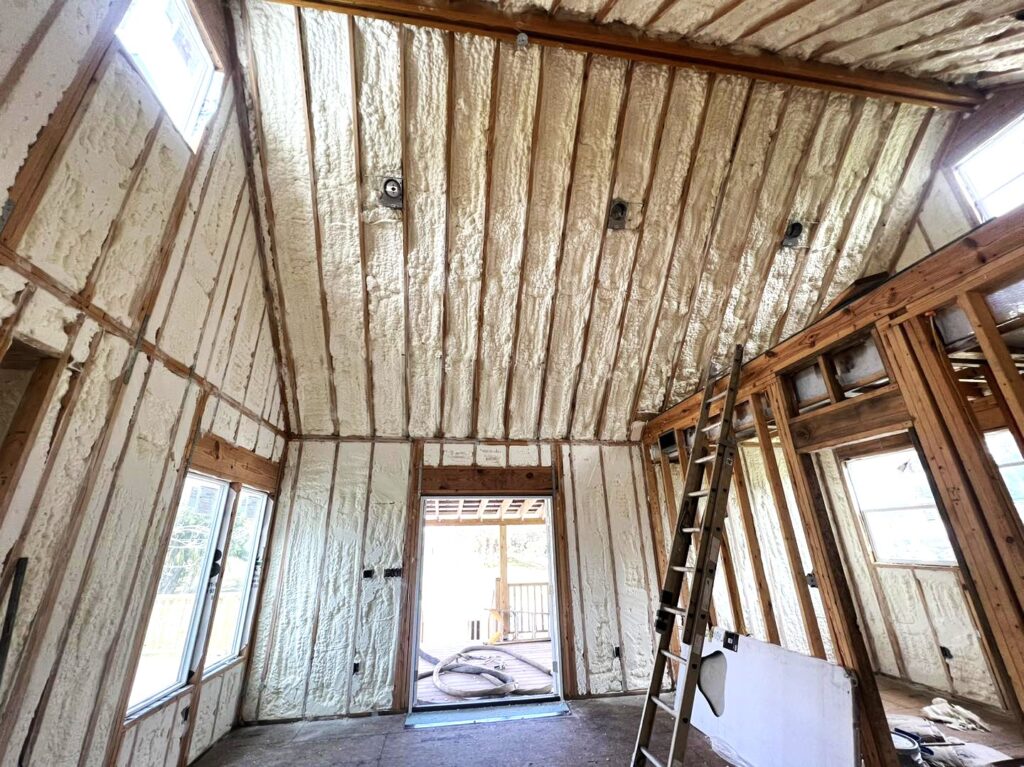
Many Louisiana homeowners want to lower the cost of improving their home insulation. Federal tax credits helped some homeowners pay for eligible energy-efficient upgrades in recent years. However, the rules have changed. As of 2026, there is no federal Energy Efficient Home Improvement Credit for new residential spray foam insulation installed after December 31, 2025. Homeowners who completed eligible work during 2025 may still be able to claim the former credit when filing their 2025 federal tax return.
The Federal Insulation Credit Ended After 2025
The Energy Efficient Home Improvement Credit covered qualified property placed in service from January 1, 2023, through December 31, 2025. Under this program, eligible insulation and air-sealing materials could receive a credit equal to 30% of their cost. The annual limit for insulation and certain other home improvements was $1,200.
The credit is no longer available for spray foam insulation in Louisiana installed during 2026 or a later year under the current federal rules. This change applies to homeowners in Baton Rouge, Covington, Hammond, Prairieville, Gonzales, Denham Springs, and other Louisiana communities. The location of the home does not extend the federal deadline. The IRS confirms that qualifying property had to be placed in service before January 1, 2026. (IRS)
Some 2025 Installations May Still Qualify
A homeowner who had spray foam insulation installed by December 31, 2025, may still qualify for the former credit. The project had to meet the energy standards that applied during that year. The insulation also needed an expected life of at least five years and had to be installed in an existing home located in the United States.
The home generally had to be the taxpayer’s main home. A rental property owned by a landlord who did not live there normally did not qualify. Newly built homes were also excluded from this homeowner credit. Eligibility depends on the home, installation date, materials, and the homeowner’s tax situation.
The Credit Covered Materials but Not Installation Labor
For an eligible 2025 project, the federal credit generally applied to the cost of qualified insulation materials and air-sealing products. Labor used to install building-envelope materials did not qualify. This means homeowners need an invoice that separates the product cost from the installation charge.
For example, a bill may include spray foam materials, site preparation, removal of old insulation, labor, and other services. Only the allowed material expenses could be used when calculating the tax credit. The total credit also depended on other eligible home improvements claimed during the same year.
Expanding spray insulation was listed as a type of product that could qualify under the former program. Still, not every project or expense automatically qualified. Product records, invoices, and proof of payment should be kept with the homeowner’s tax documents.
Homeowners May Need Form 5695
Eligible homeowners generally claim residential energy credits with IRS Form 5695. A person who completed a qualifying insulation project in 2025 can review the form and its instructions when preparing a 2025 tax return.
The credit was nonrefundable. It could reduce the federal income tax a homeowner owed, but it could not create a refund larger than the person’s tax liability. An unused amount could not be carried into a later year. Homeowners who already filed without claiming an eligible 2025 project may be able to submit an amended return within the IRS filing time limits. A qualified tax professional can review the records and confirm what applies to a specific household.
Local Rebates May Still Be Available in Louisiana
The end of the federal credit does not mean every source of savings has ended. Louisiana homeowners may find local rebates, financing programs, or special offers through utility companies, local agencies, manufacturers, or insulation contractors. These programs can vary by ZIP code and may change during the year.
A homeowner in Baton Rouge may not have access to the same program as someone in Covington or Hammond. The same is true for homes in Prairieville, Gonzales, and Denham Springs. Checking current local programs before starting the project can help homeowners understand which discounts or rebates may be available. The ENERGY STAR Rebate Finder can also show offers based on location.
Spray Foam Can Still Provide Long-Term Value
Even without a current federal credit, professionally installed spray foam insulation in Louisiana can offer lasting benefits. The foam fills gaps and reduces air leakage, helping cooled indoor air remain inside the home. This can create more stable temperatures and reduce the strain placed on the air conditioner during hot Louisiana summers.
Spray foam can also help control humid airflow in attics, walls, and crawl spaces. The value of the project will depend on the building, current insulation, energy use, and quality of installation. Tax savings should be treated as a possible added benefit for an eligible past project, not the only reason to improve a home’s insulation.
Request an Estimate for Spray Foam Insulation in Louisiana
Federal tax credits are no longer available for residential insulation installed after December 31, 2025, but local programs may still offer ways to save. If you are planning spray foam insulation in Louisiana, contact Polyco Spray Foam. Their team serves Baton Rouge, Covington, Hammond, Prairieville, Gonzales, Denham Springs, and nearby communities. Request an estimate to find the right type of spray foam insulation for your property. You can also check local rebate programs or speak with a tax professional about any savings that may apply.